Growth Sector seeks to develop EDAP, Pathway to Engineering Degrees and Careers, to economic self-sufficiency extending from community college to high-paying careers in STEM. Earn While You Learn!
Learn moreGrowth Sector's EDAP Expo at CSULA
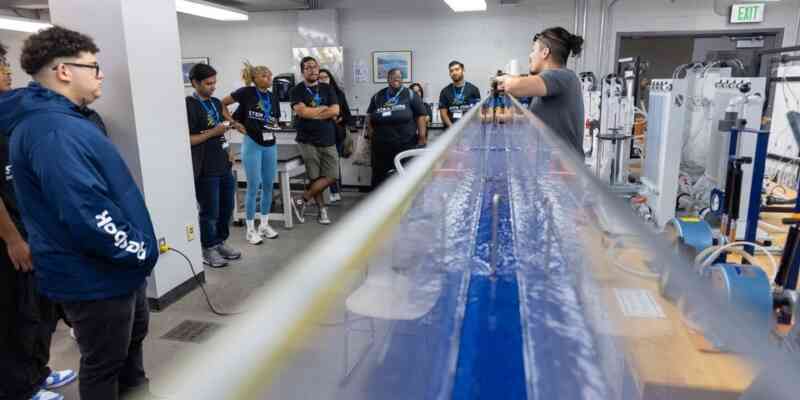
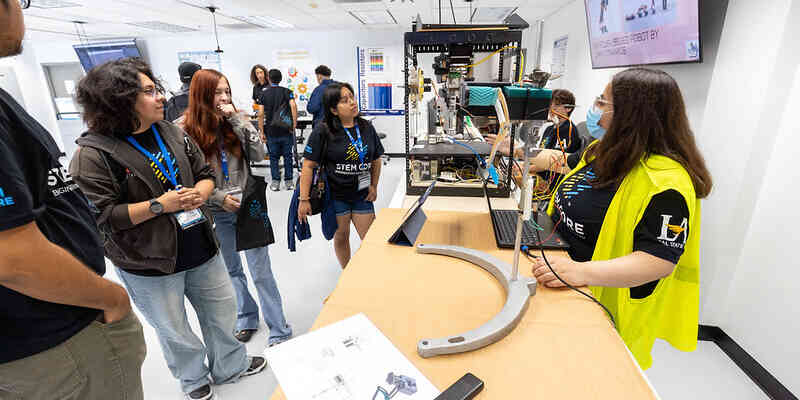
On August 1, 2025, Growth Sector, in partnership with California State University, Los Angeles, and Caltrans, successfully hosted the inaugural Building Bridges to EDAP Careers Expo, an inspiring day that spotlighted a groundbreaking new model for advancing equitable access to high-wage, high-growth careers in science, technology, engineering, and math (STEM).
Held at Cal State LA, the event gathered students, faculty, public sector leaders, and employers to mark the launch of the EDAP, Engineering Degree Apprenticeship Pathway, a bold initiative aimed at creating direct, supported pathways from community college to bachelor's degrees and employment in civil and general engineering.
The event brought together more than 100 students, including Summer Bridge participants from Los Angeles City College (LACC), East Los Angeles College (ELAC), and Los Angeles Mission College (LAMC), along with 25 current STEM engineering interns from Cal State LA’s Summer Making, Academic Prep, and Research for Transfer Students (SMART) Internship Program. Attendees engaged in a full day of interactive activities, industry panels, and networking with partners from the public and private sectors.
The Challenges:
Economic Challenges


Student Challenges



Growth Sector’s Strategic Response
Growth Sector’s Engineering Degree Apprenticeship Pathway
The EDAP Pathway combines academic learning leading to a B.S. degree with paid research and work experience.
This multi-year, year-round initiative seeks to open engineering opportunities to more and more diverse community college students.

Step 1 - Summer
(year 1)
- Participate in EDAP Summer Bridge
- $1,500-$2,000 stipend

Step 3
(year 2)
- University Research Internship/Paid employer internships
- $6,400-$8,000 in wages
- Employer driven research internships at four year universities
- Industry internships with partner employers such as National Labs, Lockheed Martin, Caltrans and others

Step 5
(year 3-5)
- Transfer and part time industry work until BS degree graduation
- Earn up to $22,000 per year
- Continue apprenticeship, working part-time during academic year and full-time during summer
- Continue receiving academic support

Beyond
- Engineering careers
- Average starting wage: $100-150,000/yr and above

Step 2
(year 1)
EDAP Coursework (Math, Engineering) at your community college

Step 4
(year 2)
- Continue transfer coursework + begin apprenticeship
- Part-time wages up to $20,000/yr

Step 6
(year 3-5)
- Graduate with BS and transition to full time industry work
- Starting wage of $70-90,000/yr
- Career wages of $100-150,000/yr and above
Step 1 - Summer
(year 1)
- Participate in EDAP Summer Bridge
- $1,500-$2,000 stipend
Step 2
(year 1)
EDAP Coursework (Math, Engineering) at your community college
Step 3
(year 2)
- University Research Internship/Paid employer internships
- $6,400-$8,000 in wages
- Employer driven research internships at four year universities
- Industry internships with partner employers such as National Labs, Lockheed Martin, Caltrans and others
Step 4
(year 2)
- Continue transfer coursework + begin apprenticeship
- Part-time wages up to $20,000/yr
Step 5
(year 3-5)
- Transfer and part time industry work until BS degree graduation
- Earn up to $22,000 per year
- Continue apprenticeship, working part-time during academic year and full-time during summer
- Continue receiving academic support
Step 6
(year 3-5)
- Graduate with BS and transition to full time industry work
- Starting wage of $70-90,000/yr
- Career wages of $100-150,000/yr and above
Beyond
- Engineering careers
- Average starting wage: $100-150,000/yr and above
Why Is It Innovative?
The EDAP degree apprenticeship pathway overcomes barriers to community college students seeking and succeeding in engineering careers by providing:
• A clearly defined and supported pathway beginning prior to community college enrollment and leading to transfer, a B.S. degree, and engineering career.
• Applied engineering skills, experience, networks, and confidence through integrated paid research and internships.
• Financial resources–$80-100K earned throughout student pathway to support pursuit of a B.S. degree.



Our Partners








Current Locations
Get updates
Sign up for occasional newsletters to get the latest from Growth Sector
Our updates feature news, research, and stories of impact from across our national network